Showing posts with label computers. Show all posts

Friday, October 27, 2017

Passwords gone crazy!

When computers were new, and cyber security still an unknown term, people would often write their passwords on papers right at their desks. That's clearly a stupid thing to do, but I bring it up because people have had difficulty with passwords from the very beginning. Now, we have passwords for nearly everything we do online and offline. A personal pet peeve of mine is when I'm signing up on an inconsequential website and they ask for a password, then immediately reprimand me for not making it "secure" enough--only then do they mention requirements of two symbols, non-repeating letters, at least three numbers, capital and lower-case letters, and that it not be a dictionary word. Good grief! I'm not logging into Fort Knox, I'm just reading a news column. Sheesh.

All these passwords have created a new generation of writing the password on your desk ledger ... making one "secure" password and then incrementing each new one by a numerical digit. For instance, "1#dG(!832_d%" becomes "1#dG(!832_d%1" and "1#dG(!832_d%2" and "1#dG(!832_d%3". This creates the same problem, in that if someone gets your password, it's simple to gain access to everything else. There are special programs that will compile all your saved passwords and then enter them for you in a super secure way, and these applications are fabulous. Just don't lose your master password ... or post it on a desk note.

I've become less convinced of the need for passwords in many instances. Yes, anything we pay for should be protected, but why protect a simple new site that only wants to track my views? Leave it at a username and drop the password. If I order a pizza, then remember my address and give points for that, and not because I created an account which I forgot the password to. Places are obsessed with tracking user behavior (which I can understand), but this has caused a tidal wave of passwords and usernames. Oh, and don't forget to change your passwords now and then ... augh!

- M

Friday, February 26, 2016

Building a better brain

In the field of artificial intelligence (AI for short), scientists are constantly working to give a computer the ability to reason. So far, there hasn't been much success. A new system from Google is now tackling a neat idea: trying to figure out where any particular picture was taken. They call their new project PlaNet, and it's a neural network AI (basically, it's a primitive brain, which can make all sorts of connections and basically program itself). Technology aside, the premise is asking how we humans recognize places and doing the same from a machine perspective. You can try a game about this idea at www.geoguessr.com.
 
I'm not particularly worried that computers will overtake humans in the world of thinking. Yes, computers are amazing at calculations, and geo-locating is just that, but reason is beyond programming. Logic, cold and hard facts, massive databases, blitzing to the answer, these are things computers do well. I read that just recently a proficient GO program was beating most players. That's excellent, yet the program is only examining all possible moves rather than intuiting the best flow for the game (as a human does). It's called brute force computing (throw enough power and resources at the problem and you will eventually find the best answer).
 
Until we can give computers any kind of intuitive ability to leap beyond facts and to an answer, computers will never reason. But, there is danger in trying, because we have a word for people who can reason but have no morality--sociopaths. Computers have no morals, holding only what has been specifically programmed into them. That's why I'm not worried about robots taking over. At some basic level no human wants to make such a beast. Instead, we make intelligent tools for specific tasks and watch in awe as they perform with perfect ability.
 
- M

Wednesday, May 13, 2015

Protecting your computer from the evil internet


Being a computer programmer, I get asked a lot how to protect yourself online. Well, firstly I'd say stop clicking on ads or anything that looks unsafe. Basically, if you didn't specifically want to go someplace, don't let a website steer you. With that out of the way, you probably want to invest in a good solid anti-spyware/anti-malware program. There are plenty to choose from, and if you go to any electronics store that sells software you'll be fine with what you find there. Particularly you want "active" protection that scans your computer as you use it, as well as the regular "scans" when you tell the software to check out your system and fix anything fishy. McAfee is wonderful, while Norton is loaded on everything these days. Both work great.

If you're wanting something free, check out Spybot for active protection (though it also scans) and MalwareBytes for powerful scanning. The combination of these two works great to keep you safe online, and you can upgrade to the purchased version for nice bonuses as well. So, even on a limited budget you can still keep yourself safe. And, if you don't like it, you've wasted nothing.

As general rules, keep in mind that this isn't the Wild West. With an active scanner in place there is little to fear. Sure, there are times, but when you have your computer scanned regularly, while also being monitored as you use it, then you are pretty safe. Yes, be careful (haxxer sites with free movies/music/etc are like going into a lion's den with a steak around your neck) and stay away from shady stuff. Just like the rest of life, if it stinks it's probably dead.

- M

For a bit of the funnier side (and a lot of hyperbole), check out this video:

Wednesday, March 25, 2015

Epic backgrounds

These days there are so many backgrounds you can put on your computer (or other electronic device) that it's hard to keep one for very long. I'm currently enjoying various fantasy art backgrounds, but I'm also tempted by space shots. I tend to hold onto a background for several weeks before I change it up. And, yes, I do have a few where the background is one awesome fantasy library with books piled ridiculously high and floating candles and all sorts of neat gizmos.

And, because of cameras being everywhere, due to phone also being everywhere, we never need to miss another family picnic or get-together. So, our cameras have selfies, or candid pictures of friends, and other goofy stuff. The age of searching out that one great picture to keep as your background for a year is over, replaced by willy-nilly changes. I'm okay with that. Actually, I've even tried the auto-changing backgrounds that flip every hour or so. I've got a huge assortment of images to choose from and it's tough to pick.

One thing I'm still waiting for is a background that is essentially a window. I can't be the only who wants a live aquarium (with nice high definition) and not just bad cgi fishies wiggling around. As a matter of fact, I'd love to have one of those Slow Glass screens imagined in the absolutely incredible science fiction short story of the "Light of Other Days." Imagine being able to look through glass that held within it the actual picture of another place--such as a mountain vista--as if it were a window in your living room? What a fantastic thing it would be!

- M

Monday, March 2, 2015

Juice and computer keyboards don't mix

I've been around computers basically since they appeared in schools and homes. One thing I've been constant about is don't get water on the cpu or the keyboard. I'm currently typing on a keyboard I am actually astonished to be using. I essentially poured orange juice all over it. Not a little. Not a sip. A whole glass of it. Yes, orange juice is sticky, but it also creates a very unique smell when applied to a keyboard (something south of rotting fruit). My guess is that I have a short time to write this post before the keyboard gets too sticky to use the keys anymore. Frankly, I'm amazed it even functions.

One time my wife spilled a single drop of water on this very same type of keyboard. There was a little pop... a fizzle... and a tiny spark. Wammo, no more keyboard. This silly thing took a whole glassful and is still going. Not sure why, but it won't last long. It's a pity, because this is one of the old Microsoft Ergonomic Elite keyboards that aren't made anymore. It has gotten dusty and dirty though; the casing has yellowed with age, and no amount of cleaning will bring back the luster of youth. I've written three books with it, so it has done well for me.
Rest in Peace

Amazing how tools become like dear cousins after a while. Despite them being hard to understand and a bit distant, they worm their way into our lives and stay there forever. I'll miss this old keyboard .. but, no I'm not burying it in the backyard.

I'll bury it in the front...

- M

Tuesday, December 2, 2014

Viruses, Malware, Trojans, and all kinds of nasty critters

 
I've spent a great deal of my life understanding computers, and one thing that has never changed is that there are rodents out there who enjoy causing pain and suffering through computer viciousness. Back in the beginning the main ones were viruses and trojan horses (time-delayed viruses essentially). There were a number of other things (like "worms") but they dropped out of the dictionary because nobody understood them anyway. Sadly, people are still doing it and are getting vastly better and more devious than ever before.
 
Sony suffered a major attack this past week, when a group called *G.O.P* (not the political party) stole 5 movies and threw them out to the Internet. Then there was Stuxnet which the United States intelligence community deployed into the Iraq manufacturing sector and destroyed a bunch of equipment. Now the FBI has issued a severe warning about destructive malware. The supposedly invulnerable "Blackphone" has already been successfully hacked.
 
So, what can be done? First, don't click on any web advertisements (unless you are sure they are what they appear to be). Second, arm your computer with some form of anti-virus (Malware Bytes & Spybot are free, but there are many other fine one to purchase). Third, be aware that threats are out there and be cautious. Fourth, do not click on any emailed links unless you absolutely trust the email's sender (even then, examine the link's address and make sure it goes where it says it does). It's ridiculously easy to spoof a link, so err on the side of caution.
 
I hope these tips help you out. There are lots more things to do, but awareness is where it all starts. If you want to know more, Microsoft has an excellent site: http://www.microsoft.com/security/pc-security/protect-pc.aspx.
 
- M

Saturday, November 29, 2014

Roleplaying games

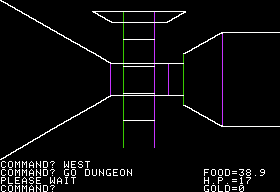
I've played computer roleplaying games since the days of Akalabeth (look it up for a laugh!) and Zork, right on up to the newest and greatest online and single player extravaganzas. I've played pen and paper roleplaying, and thoroughly enjoyed bringing up a character and watching them gain power and skills. The greatest joy to me is defining a new character and disappearing into the role. Maybe that's how actors feel when they step into their movie roles? Probably.
 
The joy of roleplaying extends far beyond fantasy or science fiction. Therapists use role playing to foster understanding, while scientists use role playing to seek new theories. It's a useful exercise. Mostly it's used for games though, since taking on a fantasy role is loads of fun. Just imagine being a dragonrider, or shooting balls of flame from your hands, or maybe taking a trip to Pluto in your own personal spaceship.
 
My thoughts run to virtual reality. There are plenty of science fiction stories that explore the addictive effects of using virtual reality long-term. But, there are also lots of stories where virtual reality is a useful tool. I hope we get to try it out in the next few years, especially with the new Oculus Rift device showing real promise. Right now the entry point into virtual reality is just too expensive, but it will continue coming down. I can hardly wait to grip my imaginary staff in hand and ride the eagles with Gandolf!
 
- M

Monday, November 24, 2014

Computer generated imagery.

Since computers were invented, they have been used to display mathematical formulae. I remember getting my first computer--a little palm sized sucker that had a whopping 3kb of memory, and could store something on the order of 100 lines of computer code. It was a fancy calculator really, but it did print out a really neat visualization of a wormhole. Then came the personal computers--Apple II+ and the TI-80s and IBMs. It was a great time to watch graphics grow more and more impressive. I especially remember two pictures created by Silicon Graphics workstations... one of a billiard table with amazingly rendered balls (they even made a special process to put scuffs and dirt on the surfaces) and another of a wet mountain road. Such simple pictures are nothing these days, but were incredibly impressive back then.
 
Since those early days, computer graphics have accelerated to the point of absolute reality. Given a bit of time, modern graphics are capable of nearly perfect replication of reality. Even console gaming systems, like the PS4 or XBox One, are able to display live images that feel pretty real--they're even making the eyes seem far less fake now too. The time will come when we will finally get to the point where we won't be able to tell the difference.
 
Probably the final frontier is when movies have computer generated actors who are just as real as the real-live actors. Motion capture is highly developed now, giving us the phenomenal Gollum, as well as the Na'vi from Avatar. So, the foundation is there, and it'll only take a bit longer before we can create literally anything we can imagine. Virtual reality (still very far from being good) is the step afterward and then we'll have the Star Trek Holodecks we've all been craving! I can't wait. Pardon me while I do my happy dance...
 
- M